July 17, 2016

Review: The Hatred of Poetry

Lerner, Ben. The Hatred of Poetry. (FSG 2016)
Review Written and Edited by Peter Buller


The space of poetry has always been a space of contention. Ever since Plato decried the usefulness of poetry in The Republic, poets needed to justify its value on a social scale, while maintaining a voice independent of the infinite others to which they must speak. The result of these staggering conditions lends poets the senseless expectation to write an independent experience that speaks across the gulf of time. Needless to say, this desire--supported both by poets, their critics, and non-poets--lends poetry the reputation of being a failed profession. In Plato's terms, poetry cannot replicate reality, justice, truth, or even other people's occupations better than the world itself. One only needs a mirror, apparently, to prove the uselessness of poetry. It is this oversimplified perspective of the poetic work which Ben Lerner analyzes in The Hatred of Poetry. Lerner articulates the means by which dentists and labourers, historians and critics, and even poets themselves, built the edifice of poetry upon a scaffold of resentment and how the echoes of poetry's self-contempt resonate in the poetic climate of the 21st century.

July 10, 2016

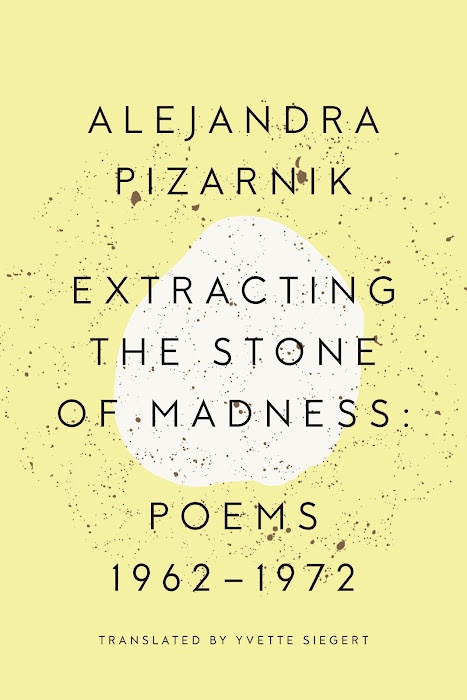
Review: Extracting the Stone of Madness: Poems 1962-1972

Pizarnik, Alejandra (trans. Yvette Siegert). Extracting the Stone of Madness: Poems 1962-1972 (New Directions 2016)
Review Written and Edited by Peter Buller


To speak and write casts the poetic brush upon the sprawling canvas of silence and the empty page. Since Mallarmé's book of blank pages, Rimbaud's elected silence, and Artaud's fixations with turmoil, the question of what picture this brush produces has turned from the poet's words to the gulf of silence. Poets must accept the groundwork laid by all their predecessors; yet looming over all of them is what may only be the predecessor to our language: silence. What to do with silence, how to incorporate its dark spectre into the discourse of illuminated images and enlightened words, has since become a preoccupying question in poetic discourse; a question never more thoroughly investigated than by Alejandra Pizarnik. In spite of her immense influence on immanent writers and poets, from Octavio Paz and Roberto Bolaño, to César Aira and Italo Calvino, Pizarnik's work has largely gone untranslated, and thus unheard in English audiences. Yvette Siegert's translations of Diana's Tree (Ugly Duckling Presse 2014) and A Musical Hell (New Directions 2013) now follow Pizarnik's greatest collection of work in English, Extracting the Stone of Madness: Poems 1962-1972. Siegert's translations reveal Pizarnik's impassioned dedication shadows and madness and the destructive blossoms of this poetic enterprise.