Written and Edited by Peter Buller
Upon learning of his nomination as a candidate for the Nobel Prize in Literature, Jean-Paul Sartre wrote to the committee and requested they remove him from their list. "I suppose that by writing to the Academy," he wrote later in a statement made to the Swedish Press, "I could make matters clear and that there would be no further discussion." Instead, his letter incited a literary scandal: had Europe's most esteemed literary institution been stiffed, and by one of its recipients no less? Sartre's reasons for refusing the prize, while couched in the literary and political quarrels of his time, sparked a discussion on the authoritarian role of institutions in the literary world. The conversation simmered down, only to resurface with the Academy's recent decision to award the Prize in Literature to Bob Dylan.
December 31, 2016

October 29, 2016
A quick update
So things have been rather quiet here for the past month or so, and I thought I'd offer a little update, or explanation, of where things are headed for the next month or so.
October 7, 2016
Review: The War Works Hard
Mikhail, Dunya. The War Works Hard (Trans. Elizabeth Winslow). New Directions 2005.
Review Written and Edited by Peter Buller

War has preoccupied poets for millennia. Poets have meditated on war since Homer, and contemporary efforts scrutinize war so much as to create its own genre. Anti-war poetry sought to remove the aloof veil surrounding the poem and replace it with something hard, abject, impermissible. It was an attempt of the twentieth century post-war crowd to provide a jolt of ethics into the hearts of a crowd growing increasingly disillusioned. Regardless of how one judges the success of anti-war poetry, the project did succeed, more or less, to destabilize war's many faces. Thus, war has been examined and analyzed, glorified and justified, bemoaned and criticized; but has it ever been thanked? There is a somber, knowing tone that pervades most poetic ruminations of war. Marked by a love of tired polemics and starved images, countless reiterations have blunted this tonal point. Dunya Mikhail's The War Works Hard thus offers something fresh and poignant to a poetic body frequently lacking either. In an ironic voice and self-defacing images, The War Works Hard places its anti-war poetics neither above nor beyond the war it criticizes, but uneasily, at its side.
Review Written and Edited by Peter Buller

War has preoccupied poets for millennia. Poets have meditated on war since Homer, and contemporary efforts scrutinize war so much as to create its own genre. Anti-war poetry sought to remove the aloof veil surrounding the poem and replace it with something hard, abject, impermissible. It was an attempt of the twentieth century post-war crowd to provide a jolt of ethics into the hearts of a crowd growing increasingly disillusioned. Regardless of how one judges the success of anti-war poetry, the project did succeed, more or less, to destabilize war's many faces. Thus, war has been examined and analyzed, glorified and justified, bemoaned and criticized; but has it ever been thanked? There is a somber, knowing tone that pervades most poetic ruminations of war. Marked by a love of tired polemics and starved images, countless reiterations have blunted this tonal point. Dunya Mikhail's The War Works Hard thus offers something fresh and poignant to a poetic body frequently lacking either. In an ironic voice and self-defacing images, The War Works Hard places its anti-war poetics neither above nor beyond the war it criticizes, but uneasily, at its side.
September 23, 2016
Review: Second Childhood
Howe, Fanny. Second Childhood. Graywolf Press 2014.
Review Written and Edited by Peter Buller

Childhood is the ultimate fantasy of adulthood. After experiencing the absurd tediousness of working-class life, the boundless simplicity and freedom of childhood becomes not just nostalgic, but materialistically enticing. Fantasizing for childhood extends beyond materialist desires, as well. "The Three Metamorphoses" of Nietzsche's Zarathustra imagines a child as the culmination of a human spirit's growth into extra-moral superhumans. There is something weightless and innocent to childhood that makes its perspective attractive--to poets, philosophers, and people in general. Since her intriguing reflections on bewilderment, faeries, and more (from The Wedding Dress), one could perceive Fanny Howe as one such poet attracted to childhood. Her short collection Second Childhood reinforces this without compromising her weave of imagination, multiculturalism, and determination to ask questions without answers.
Review Written and Edited by Peter Buller

Childhood is the ultimate fantasy of adulthood. After experiencing the absurd tediousness of working-class life, the boundless simplicity and freedom of childhood becomes not just nostalgic, but materialistically enticing. Fantasizing for childhood extends beyond materialist desires, as well. "The Three Metamorphoses" of Nietzsche's Zarathustra imagines a child as the culmination of a human spirit's growth into extra-moral superhumans. There is something weightless and innocent to childhood that makes its perspective attractive--to poets, philosophers, and people in general. Since her intriguing reflections on bewilderment, faeries, and more (from The Wedding Dress), one could perceive Fanny Howe as one such poet attracted to childhood. Her short collection Second Childhood reinforces this without compromising her weave of imagination, multiculturalism, and determination to ask questions without answers.
September 3, 2016
Review: Rock Crystal
Stifter, Adalbert. Rock Crystal (Trans. Elizabeth Mayer and Marianne Moore). New York Review of Books 2008.
Review Written and Edited by Peter Buller.

Ephemerality lies at the heart of all description. From skimmable sentences to carefully conceived images, description always forms a fleeting, linguistic conceptualization of the thing described. Character's outfits and background scenery is detailed, and before long the reader finds these things forgotten as the text's more intriguing insights unfold. Moreover, description always services a greater purpose. Even proponents of "show, don't tell" suggest a writing more dedicated to images--or sentiments, or concepts, etc.--behind and beyond descriptions, rather than the language of description itself. One would be remiss to read Hemingway for his descriptions of trees, after all. Description, it seems, fits in one of two critical frameworks: first, as one of the few remaining utilities of the objective approach to literature (which Robbe-Grillet's Jealousy cunningly criticizes); and second, as a functional but dull way to convey information to the reader in service of a deeper theme. Neither approach grants description much, if any, appeal; nor offers it any real defense. Criticisms of objective writing tend to argue against the authenticity of an approach riding on descriptions, while critics of the latter permit that other literary tools often serve writing better than bland description. Our critical consensus seems ready to do away with description altogether; though sometimes the exceptions to our critical perceptions slip through the cracks. Such is the case of Adalbert Stifter's Rock Crystal and its shimmering prose.
Review Written and Edited by Peter Buller.

Ephemerality lies at the heart of all description. From skimmable sentences to carefully conceived images, description always forms a fleeting, linguistic conceptualization of the thing described. Character's outfits and background scenery is detailed, and before long the reader finds these things forgotten as the text's more intriguing insights unfold. Moreover, description always services a greater purpose. Even proponents of "show, don't tell" suggest a writing more dedicated to images--or sentiments, or concepts, etc.--behind and beyond descriptions, rather than the language of description itself. One would be remiss to read Hemingway for his descriptions of trees, after all. Description, it seems, fits in one of two critical frameworks: first, as one of the few remaining utilities of the objective approach to literature (which Robbe-Grillet's Jealousy cunningly criticizes); and second, as a functional but dull way to convey information to the reader in service of a deeper theme. Neither approach grants description much, if any, appeal; nor offers it any real defense. Criticisms of objective writing tend to argue against the authenticity of an approach riding on descriptions, while critics of the latter permit that other literary tools often serve writing better than bland description. Our critical consensus seems ready to do away with description altogether; though sometimes the exceptions to our critical perceptions slip through the cracks. Such is the case of Adalbert Stifter's Rock Crystal and its shimmering prose.
August 26, 2016
What Is This About?
Breaking for the moment with my usual formality, I thought I'd take the time to explain some of my intentions/goals with this review blog. Over the past years I've gathered quite the host of books, old and new, poetry and fiction, critical and creative works, etc. which have filled bookshelves and formed impressive piles elsewhere. Some of these I read, others hoarded for the right opportunity; yet I felt guilty of not really "doing anything" with any of them, creatively or critically. In an effort to express their use to others, as well as explore and expand my own critical work, I wanted to write brief-but-thorough pieces on the books dotting my shelves--most of which has gone largely unnoticed in the deluge of larger literary successes.
Hence, the origins for this review blog. Overcast Review is a site for book reviews, focusing on works of insight and intrigue from writers of varying perspectives and origins. This includes writers all across the globe, in translation or not, and of all colours, sexes, genders, and creeds. I hope to draw special attention to works published by independent publishers, whose dedications to marginalized writers and translated works have profoundly influenced my appreciation for writing, reading, and books in general. All my reviews may be considered recommendations for the books in question, regardless of how critical I may be. Although I won't hold back criticism where it's due, I intend to avoid publishing negative reviews.
Reviews currently go up as soon as they're written, which has so far been one or two per month. I hope to continue on this schedule, and I'd welcome any visitors to follow me on my literary adventures. I'm also open for submissions. Those interested should contact me at overcastreview@gmail.com for details. Suggestions for books to review are also welcome. Anyhow, I hope you stick around and read good books with me!
Best regards,
Peter Buller, Editor-in-Chief.
Hence, the origins for this review blog. Overcast Review is a site for book reviews, focusing on works of insight and intrigue from writers of varying perspectives and origins. This includes writers all across the globe, in translation or not, and of all colours, sexes, genders, and creeds. I hope to draw special attention to works published by independent publishers, whose dedications to marginalized writers and translated works have profoundly influenced my appreciation for writing, reading, and books in general. All my reviews may be considered recommendations for the books in question, regardless of how critical I may be. Although I won't hold back criticism where it's due, I intend to avoid publishing negative reviews.
Reviews currently go up as soon as they're written, which has so far been one or two per month. I hope to continue on this schedule, and I'd welcome any visitors to follow me on my literary adventures. I'm also open for submissions. Those interested should contact me at overcastreview@gmail.com for details. Suggestions for books to review are also welcome. Anyhow, I hope you stick around and read good books with me!
Best regards,
Peter Buller, Editor-in-Chief.
August 20, 2016
Review: Tiger Fur
Maranhão, Salgado (Trans. Alexis Levitin). Tiger Fur (White Pine Press 2015).
Review Written and Edited by Peter Buller

Love--that cliché of poetry. Requested by enamoured fools addled by the hope that cheaply-peddled words will blossom love out of indifference (and, if we're honest, disinterest), love is the phantom-load poets presumably bear. Our "universal" ability to write poetry usually stems from this nauseating rose. Everyone knows love, though rarely treats it with the decadence (as per Baudelaire) or grace (as per Lila Zemborain) to entreat one's nose beyond a quick whiff. Love poems are unfortunately successful, not merely for their accessibility (for who hasn't felt love?), but for their easy digestion too. It's an undesirable trait most obviously typified by its preface. How often has, "this is a love poem," replaced any intriguing insights? How often does the phrase wave away half-baked almost-rhymes, poorly-worded sonnets, cringe-worthy metaphors? Love is the likely suspect of any bad poem, especially if nestled in an angsty adolescent's hidden diary; and because the conceptual interest in love poetry remains "universal," they are bound to stay. However, if considering Tiger Fur--one of Salgado Maranhão's most recent works--as love poems, they do the form a much needed justice.
Review Written and Edited by Peter Buller
Love--that cliché of poetry. Requested by enamoured fools addled by the hope that cheaply-peddled words will blossom love out of indifference (and, if we're honest, disinterest), love is the phantom-load poets presumably bear. Our "universal" ability to write poetry usually stems from this nauseating rose. Everyone knows love, though rarely treats it with the decadence (as per Baudelaire) or grace (as per Lila Zemborain) to entreat one's nose beyond a quick whiff. Love poems are unfortunately successful, not merely for their accessibility (for who hasn't felt love?), but for their easy digestion too. It's an undesirable trait most obviously typified by its preface. How often has, "this is a love poem," replaced any intriguing insights? How often does the phrase wave away half-baked almost-rhymes, poorly-worded sonnets, cringe-worthy metaphors? Love is the likely suspect of any bad poem, especially if nestled in an angsty adolescent's hidden diary; and because the conceptual interest in love poetry remains "universal," they are bound to stay. However, if considering Tiger Fur--one of Salgado Maranhão's most recent works--as love poems, they do the form a much needed justice.
August 5, 2016
Review: Black Wings Has My Angel
Chaze, Elliot. Black Wings Has My Angel. (New York Review of Books 2016)
Review Written and Edited by Peter Buller

Noir depicts the unsavory lifestyles of crime and debauchery through a lucid lens. Whether this contributed to the amoral philosophizing among the early films of Jean-Luc Godard, or the dark-hearted catharsis of the films that inspired Godard, the result was a gray scene with worldly cynicism as the presiding ideology. The free-flighted morality necessary to maintain this thematic cloud looming overhead required constant movement, and so, the noir work rarely dealt with place as anything more than fleeting: the undefined sight of a town flashing by a car racing off to nowhere. Such ease of movement makes possible the opening sequence of Welles' The Touch of Evil, and the plentiful opportunities for mischief in Godard's Pierrot le Fou. The fleeting nature of settings for the noir work establishes a culture of placelessness, the environment most suitable for the growth of skepticism. Perhaps for this reason, Elliott Chaze's Black Wings Has My Angel stands alone among noir works today. The remarkable succinctness of his prose orients noir cynicism toward the anxiety of living in a home that isn't home, or more crucially, a home that is only "home."
Review Written and Edited by Peter Buller
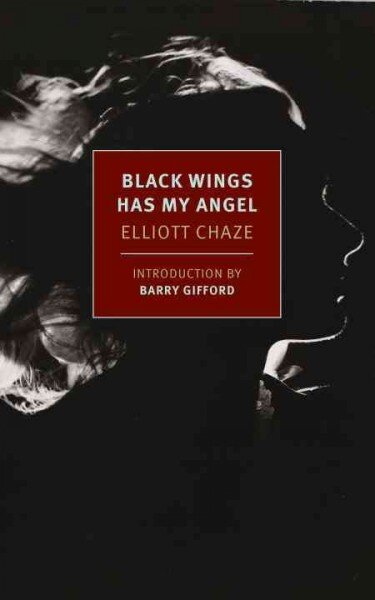
Noir depicts the unsavory lifestyles of crime and debauchery through a lucid lens. Whether this contributed to the amoral philosophizing among the early films of Jean-Luc Godard, or the dark-hearted catharsis of the films that inspired Godard, the result was a gray scene with worldly cynicism as the presiding ideology. The free-flighted morality necessary to maintain this thematic cloud looming overhead required constant movement, and so, the noir work rarely dealt with place as anything more than fleeting: the undefined sight of a town flashing by a car racing off to nowhere. Such ease of movement makes possible the opening sequence of Welles' The Touch of Evil, and the plentiful opportunities for mischief in Godard's Pierrot le Fou. The fleeting nature of settings for the noir work establishes a culture of placelessness, the environment most suitable for the growth of skepticism. Perhaps for this reason, Elliott Chaze's Black Wings Has My Angel stands alone among noir works today. The remarkable succinctness of his prose orients noir cynicism toward the anxiety of living in a home that isn't home, or more crucially, a home that is only "home."
July 17, 2016
Review: The Hatred of Poetry
Lerner, Ben. The Hatred of Poetry. (FSG 2016)
Review Written and Edited by Peter Buller

The space of poetry has always been a space of contention. Ever since Plato decried the usefulness of poetry in The Republic, poets needed to justify its value on a social scale, while maintaining a voice independent of the infinite others to which they must speak. The result of these staggering conditions lends poets the senseless expectation to write an independent experience that speaks across the gulf of time. Needless to say, this desire--supported both by poets, their critics, and non-poets--lends poetry the reputation of being a failed profession. In Plato's terms, poetry cannot replicate reality, justice, truth, or even other people's occupations better than the world itself. One only needs a mirror, apparently, to prove the uselessness of poetry. It is this oversimplified perspective of the poetic work which Ben Lerner analyzes in The Hatred of Poetry. Lerner articulates the means by which dentists and labourers, historians and critics, and even poets themselves, built the edifice of poetry upon a scaffold of resentment and how the echoes of poetry's self-contempt resonate in the poetic climate of the 21st century.
Review Written and Edited by Peter Buller

The space of poetry has always been a space of contention. Ever since Plato decried the usefulness of poetry in The Republic, poets needed to justify its value on a social scale, while maintaining a voice independent of the infinite others to which they must speak. The result of these staggering conditions lends poets the senseless expectation to write an independent experience that speaks across the gulf of time. Needless to say, this desire--supported both by poets, their critics, and non-poets--lends poetry the reputation of being a failed profession. In Plato's terms, poetry cannot replicate reality, justice, truth, or even other people's occupations better than the world itself. One only needs a mirror, apparently, to prove the uselessness of poetry. It is this oversimplified perspective of the poetic work which Ben Lerner analyzes in The Hatred of Poetry. Lerner articulates the means by which dentists and labourers, historians and critics, and even poets themselves, built the edifice of poetry upon a scaffold of resentment and how the echoes of poetry's self-contempt resonate in the poetic climate of the 21st century.
July 10, 2016
Review: Extracting the Stone of Madness: Poems 1962-1972
Pizarnik, Alejandra (trans. Yvette Siegert). Extracting the Stone of Madness: Poems 1962-1972 (New Directions 2016)
Review Written and Edited by Peter Buller
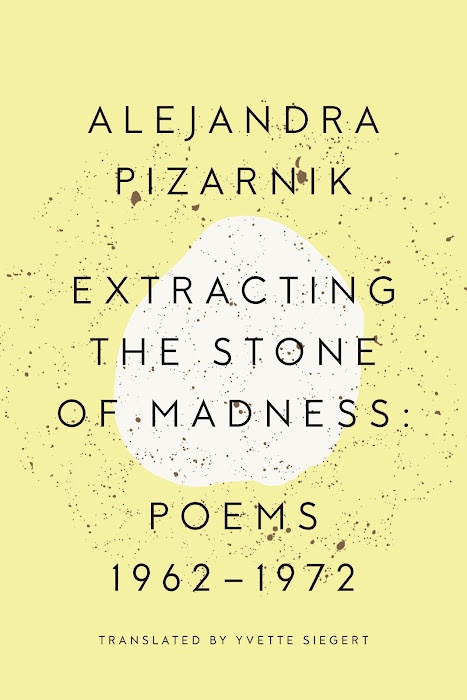
To speak and write casts the poetic brush upon the sprawling canvas of silence and the empty page. Since Mallarmé's book of blank pages, Rimbaud's elected silence, and Artaud's fixations with turmoil, the question of what picture this brush produces has turned from the poet's words to the gulf of silence. Poets must accept the groundwork laid by all their predecessors; yet looming over all of them is what may only be the predecessor to our language: silence. What to do with silence, how to incorporate its dark spectre into the discourse of illuminated images and enlightened words, has since become a preoccupying question in poetic discourse; a question never more thoroughly investigated than by Alejandra Pizarnik. In spite of her immense influence on immanent writers and poets, from Octavio Paz and Roberto Bolaño, to César Aira and Italo Calvino, Pizarnik's work has largely gone untranslated, and thus unheard in English audiences. Yvette Siegert's translations of Diana's Tree (Ugly Duckling Presse 2014) and A Musical Hell (New Directions 2013) now follow Pizarnik's greatest collection of work in English, Extracting the Stone of Madness: Poems 1962-1972. Siegert's translations reveal Pizarnik's impassioned dedication shadows and madness and the destructive blossoms of this poetic enterprise.
Review Written and Edited by Peter Buller
To speak and write casts the poetic brush upon the sprawling canvas of silence and the empty page. Since Mallarmé's book of blank pages, Rimbaud's elected silence, and Artaud's fixations with turmoil, the question of what picture this brush produces has turned from the poet's words to the gulf of silence. Poets must accept the groundwork laid by all their predecessors; yet looming over all of them is what may only be the predecessor to our language: silence. What to do with silence, how to incorporate its dark spectre into the discourse of illuminated images and enlightened words, has since become a preoccupying question in poetic discourse; a question never more thoroughly investigated than by Alejandra Pizarnik. In spite of her immense influence on immanent writers and poets, from Octavio Paz and Roberto Bolaño, to César Aira and Italo Calvino, Pizarnik's work has largely gone untranslated, and thus unheard in English audiences. Yvette Siegert's translations of Diana's Tree (Ugly Duckling Presse 2014) and A Musical Hell (New Directions 2013) now follow Pizarnik's greatest collection of work in English, Extracting the Stone of Madness: Poems 1962-1972. Siegert's translations reveal Pizarnik's impassioned dedication shadows and madness and the destructive blossoms of this poetic enterprise.
June 30, 2016
Review: The Meursault Investigation
Daoud, Kamel (Trans. John Cullen). The Meursault Investigation (Other Press 2015).
Written and Edited by Peter Buller

The Meursault Investigation undertakes the massive endeavour of simultaneously challenging and embracing the impact of a looming colonizing influence. In the same space as Albert Camus' The Stranger, Kamel Daoud's text confronts an absurd universe with a worldly estrangement even as the colonial context of Camus' novel is illuminated; yet for most critics The Meursault Investigation reads more as a rejecting Camus' novel as a reconstruction. Elisabeth Zerofsky of The New Yorker suggests as much in referring to the novel as "an Algerian rebuke" to The Stranger. Similarly, Claire Messud and John Powers' reviews of the novel conceive of Harun's narration as telling "the 'true' circumstances of [Meursault's] story and legacy" the force of which enables Daoud to "stand Camus' The Stranger on its head." This conception of Daoud as "interrogating Camus," to quote Michiko Kakutani of the New York Times, places Daoud's text in terms of what Helen Tiffin dubbed canonical counter-discourse. Alongside Jean Rhys' Wide Sargasso Sea and J. M. Coetzee's Foe, Daoud's novel challenges colonial-literary authority by undermining the canon constructed by The Stranger. Although this suggests Daoud aligns more with Frantz Fanon than Albert Camus, as Aaron Paul of The New Inquiry argues--writing that comparing the text to Camus' does the work "a great disservice"--this account seems at odds with Harun's own narrative. Paul's assertion that "there is something radically anti-literary" and the association of Daoud's text with Tiffin's counter-discursive tactics read Fanon's revolutionary ideas in to Harun's absurdist narration to contradictory effect. The most intriguing insight of The Meursault Investigation is thus not only its post-colonial riposte, but its unflinching cynicism of social upheavals--from both colonizers and colonized.
Written and Edited by Peter Buller
The Meursault Investigation undertakes the massive endeavour of simultaneously challenging and embracing the impact of a looming colonizing influence. In the same space as Albert Camus' The Stranger, Kamel Daoud's text confronts an absurd universe with a worldly estrangement even as the colonial context of Camus' novel is illuminated; yet for most critics The Meursault Investigation reads more as a rejecting Camus' novel as a reconstruction. Elisabeth Zerofsky of The New Yorker suggests as much in referring to the novel as "an Algerian rebuke" to The Stranger. Similarly, Claire Messud and John Powers' reviews of the novel conceive of Harun's narration as telling "the 'true' circumstances of [Meursault's] story and legacy" the force of which enables Daoud to "stand Camus' The Stranger on its head." This conception of Daoud as "interrogating Camus," to quote Michiko Kakutani of the New York Times, places Daoud's text in terms of what Helen Tiffin dubbed canonical counter-discourse. Alongside Jean Rhys' Wide Sargasso Sea and J. M. Coetzee's Foe, Daoud's novel challenges colonial-literary authority by undermining the canon constructed by The Stranger. Although this suggests Daoud aligns more with Frantz Fanon than Albert Camus, as Aaron Paul of The New Inquiry argues--writing that comparing the text to Camus' does the work "a great disservice"--this account seems at odds with Harun's own narrative. Paul's assertion that "there is something radically anti-literary" and the association of Daoud's text with Tiffin's counter-discursive tactics read Fanon's revolutionary ideas in to Harun's absurdist narration to contradictory effect. The most intriguing insight of The Meursault Investigation is thus not only its post-colonial riposte, but its unflinching cynicism of social upheavals--from both colonizers and colonized.
Subscribe to:
Posts (Atom)