Review Written and Edited by Peter Buller
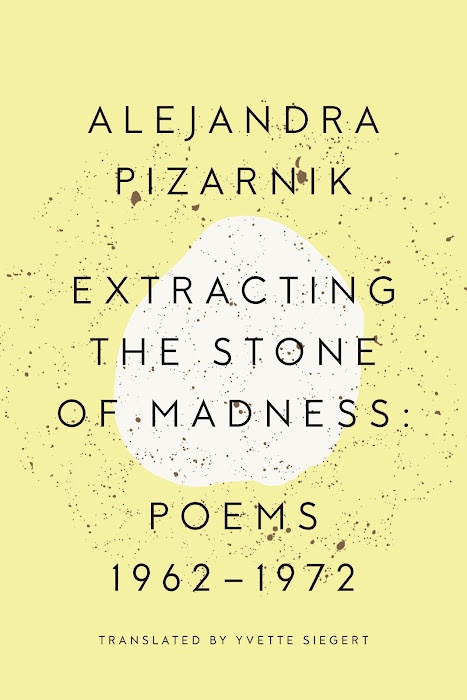
To speak and write casts the poetic brush upon the sprawling canvas of silence and the empty page. Since Mallarmé's book of blank pages, Rimbaud's elected silence, and Artaud's fixations with turmoil, the question of what picture this brush produces has turned from the poet's words to the gulf of silence. Poets must accept the groundwork laid by all their predecessors; yet looming over all of them is what may only be the predecessor to our language: silence. What to do with silence, how to incorporate its dark spectre into the discourse of illuminated images and enlightened words, has since become a preoccupying question in poetic discourse; a question never more thoroughly investigated than by Alejandra Pizarnik. In spite of her immense influence on immanent writers and poets, from Octavio Paz and Roberto Bolaño, to César Aira and Italo Calvino, Pizarnik's work has largely gone untranslated, and thus unheard in English audiences. Yvette Siegert's translations of Diana's Tree (Ugly Duckling Presse 2014) and A Musical Hell (New Directions 2013) now follow Pizarnik's greatest collection of work in English, Extracting the Stone of Madness: Poems 1962-1972. Siegert's translations reveal Pizarnik's impassioned dedication shadows and madness and the destructive blossoms of this poetic enterprise.
Pizarnik's work follows the surrealist embrace of the grotesque; yet unlike the decadence of Baudelaire, Pizarnik intends "to speak the innocent word" inside the swirl of the Night. Rather than caress a sinful world like Baudelaire, she instead seeks a space for a grasping sainthood, where the wind "issues innocent speeches/ in honor of the lilacs,/ and someone enters into death/ with open eyes." The "mute body" of her poetry, held open by a "fragile urgency," writhes from an existential turmoil that also hides its decaying sanctuary: a garden of lilacs and longing. Pizarnik's longing aims only for the fleeting and destructive, a submersion into a musical hell where the imagination is "all these fragments" that tear apart one's flesh. It is the result of an effort to attain "a perfect silence" through language, grasping not for the solid objects bound to real contours, but instead their ethereal shadows.
This preoccupation with suicidal beauty often lends Pizarnik comparisons to Sylvia Plath. However, unlike the confessional lyricism integral to Plath's poetry, Pizarnik feels discomfort with the "I," or as it also appears, "my pronoun," "my first-person singular." Rimbaud's phrase that "I is another" rings paradoxically true through Pizarnik's work. As Johannes Göransson writes, Pizarnik's "I" is the location of violence and art, neither one possible without the other. In one poem, the pronoun is the final utterance after "falling in the silence," and fails to express itself properly as "the luminous dawn." Perhaps the most enticing aspect to Pizarnik's work here is her affinity neither to Plath nor Rimbaud; but instead to a transitory self always shifting its position:
The pleasure of losing yourself in the image foreseen. I rose from my body and went out in search of who I am. A pilgrim of my self, I have one to the one who sleeps in the winds of her country.Pizarnik's metaphor for I as "a pilgrim of my self" places the self as neither visitor nor visited, local nor foreigner, one nor other; but instead in "a place that was meant for revelations" yet where only "the silence is certain." The conflict to Pizarnik's poetry is as defined by a sweet-scented dissatisfaction with life as it is by its preoccupation with the shadows of words. Italo Calvino writes of Pizarnik as "the best exponent of the poetry of introversion." To expand upon this, her work seems to link to an Orphic gesture to the work of art, as Maurice Blanchot articulates in "The Gaze of Orpheus," but only as a sleight of hand. While the poet's nihilating gaze preoccupies Blanchot's conception of the poet to the work of art, Pizarnik's interest is in Eurydice. Within the fading image her poems linger, in the dark traces left in the wake of language.
...and there are no promisesLanguage exists not in brilliance nor by basking in the light, but instead within the "night in this world/ where anything is possible/ except for/ a poem." Pizarnik's endeavour to "write words/ on this night in this world" mixes words in Night's dark shroud, embracing madness along with its dark wisdom. Whether extracting the stone of Night's madness is impossible, or if darkness, insanity, and death hold their own truths, remains difficult to answer. Regardless of Pizarnik's particular circumstances, her poetic surgery provides a mystifying testament to their power, only truly appreciable in the insecure space of dizzying madness.
in all that is speakable
this is the same as lying
(everything that can be said is a lie)
the rest is silence
only silence doesn't exist
Pizarnik's work strikes with a sharpness that penetrates language, a point which Yvette Siegert's translation further hones. Those places where Pizarnik's rhythm and musicality require the Spanish are rediscovered elsewhere in the English. True to Pizarnik's fascination with darkness, Siegert's translations finds in translation what is lost, which appears most clearly in the final sections of Pizarnik's posthumous (and previously uncollected) poems. "The Shadow-Texts" reveal Pizarnik's fascination with the unseen of language, interrogating the visible for hiding the invisible, even though one can never glimpse the invisible:
And the worst thing is that even the silence betrayed her.Here builds an impression of "words like small stones scattered into the black space of the night," a language that neither accommodates nor perceives its own absence. Pizarnik's final poems speak to an imprisonment to pretextual context. "Everything is a pretext for being a pretext," everything the shadow of something else's illumination. Up until her final moments, Pizarnik establishes a shadow-poetics that is as creative as it is destructive. Heartbreaking and beautiful, tragic and inspiring, Siegert's translation has given us the most poignant work of a poet in her final darkest moments; a harsh wind of a garden's fresh air, inseparable from the scent of the lilacs.
Because silence doesn't exist, she'd say.
The garden, the voices, the writing, the silence.
All I do is search and not find. This is how I spend my nights.

No comments:
Post a Comment