Breaking for the moment with my usual formality, I thought I'd take the time to explain some of my intentions/goals with this review blog. Over the past years I've gathered quite the host of books, old and new, poetry and fiction, critical and creative works, etc. which have filled bookshelves and formed impressive piles elsewhere. Some of these I read, others hoarded for the right opportunity; yet I felt guilty of not really "doing anything" with any of them, creatively or critically. In an effort to express their use to others, as well as explore and expand my own critical work, I wanted to write brief-but-thorough pieces on the books dotting my shelves--most of which has gone largely unnoticed in the deluge of larger literary successes.
Hence, the origins for this review blog. Overcast Review is a site for book reviews, focusing on works of insight and intrigue from writers of varying perspectives and origins. This includes writers all across the globe, in translation or not, and of all colours, sexes, genders, and creeds. I hope to draw special attention to works published by independent publishers, whose dedications to marginalized writers and translated works have profoundly influenced my appreciation for writing, reading, and books in general. All my reviews may be considered recommendations for the books in question, regardless of how critical I may be. Although I won't hold back criticism where it's due, I intend to avoid publishing negative reviews.
Reviews currently go up as soon as they're written, which has so far been one or two per month. I hope to continue on this schedule, and I'd welcome any visitors to follow me on my literary adventures. I'm also open for submissions. Those interested should contact me at overcastreview@gmail.com for details. Suggestions for books to review are also welcome. Anyhow, I hope you stick around and read good books with me!
Best regards,
Peter Buller, Editor-in-Chief.
August 26, 2016

August 20, 2016
Review: Tiger Fur
Maranhão, Salgado (Trans. Alexis Levitin). Tiger Fur (White Pine Press 2015).
Review Written and Edited by Peter Buller
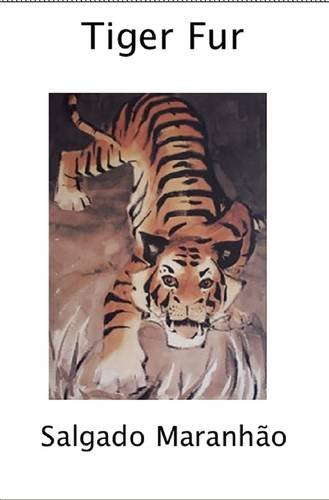
Love--that cliché of poetry. Requested by enamoured fools addled by the hope that cheaply-peddled words will blossom love out of indifference (and, if we're honest, disinterest), love is the phantom-load poets presumably bear. Our "universal" ability to write poetry usually stems from this nauseating rose. Everyone knows love, though rarely treats it with the decadence (as per Baudelaire) or grace (as per Lila Zemborain) to entreat one's nose beyond a quick whiff. Love poems are unfortunately successful, not merely for their accessibility (for who hasn't felt love?), but for their easy digestion too. It's an undesirable trait most obviously typified by its preface. How often has, "this is a love poem," replaced any intriguing insights? How often does the phrase wave away half-baked almost-rhymes, poorly-worded sonnets, cringe-worthy metaphors? Love is the likely suspect of any bad poem, especially if nestled in an angsty adolescent's hidden diary; and because the conceptual interest in love poetry remains "universal," they are bound to stay. However, if considering Tiger Fur--one of Salgado Maranhão's most recent works--as love poems, they do the form a much needed justice.
Review Written and Edited by Peter Buller
Love--that cliché of poetry. Requested by enamoured fools addled by the hope that cheaply-peddled words will blossom love out of indifference (and, if we're honest, disinterest), love is the phantom-load poets presumably bear. Our "universal" ability to write poetry usually stems from this nauseating rose. Everyone knows love, though rarely treats it with the decadence (as per Baudelaire) or grace (as per Lila Zemborain) to entreat one's nose beyond a quick whiff. Love poems are unfortunately successful, not merely for their accessibility (for who hasn't felt love?), but for their easy digestion too. It's an undesirable trait most obviously typified by its preface. How often has, "this is a love poem," replaced any intriguing insights? How often does the phrase wave away half-baked almost-rhymes, poorly-worded sonnets, cringe-worthy metaphors? Love is the likely suspect of any bad poem, especially if nestled in an angsty adolescent's hidden diary; and because the conceptual interest in love poetry remains "universal," they are bound to stay. However, if considering Tiger Fur--one of Salgado Maranhão's most recent works--as love poems, they do the form a much needed justice.
August 5, 2016
Review: Black Wings Has My Angel
Chaze, Elliot. Black Wings Has My Angel. (New York Review of Books 2016)
Review Written and Edited by Peter Buller

Noir depicts the unsavory lifestyles of crime and debauchery through a lucid lens. Whether this contributed to the amoral philosophizing among the early films of Jean-Luc Godard, or the dark-hearted catharsis of the films that inspired Godard, the result was a gray scene with worldly cynicism as the presiding ideology. The free-flighted morality necessary to maintain this thematic cloud looming overhead required constant movement, and so, the noir work rarely dealt with place as anything more than fleeting: the undefined sight of a town flashing by a car racing off to nowhere. Such ease of movement makes possible the opening sequence of Welles' The Touch of Evil, and the plentiful opportunities for mischief in Godard's Pierrot le Fou. The fleeting nature of settings for the noir work establishes a culture of placelessness, the environment most suitable for the growth of skepticism. Perhaps for this reason, Elliott Chaze's Black Wings Has My Angel stands alone among noir works today. The remarkable succinctness of his prose orients noir cynicism toward the anxiety of living in a home that isn't home, or more crucially, a home that is only "home."
Review Written and Edited by Peter Buller
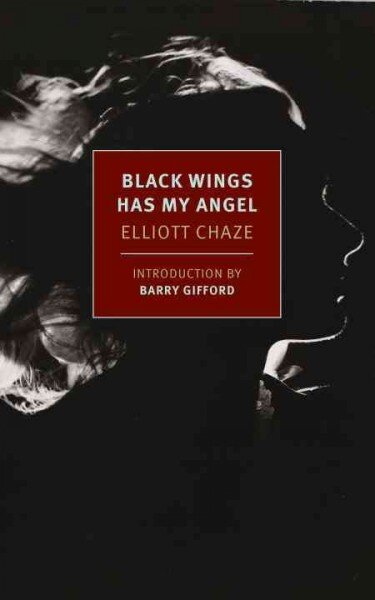
Noir depicts the unsavory lifestyles of crime and debauchery through a lucid lens. Whether this contributed to the amoral philosophizing among the early films of Jean-Luc Godard, or the dark-hearted catharsis of the films that inspired Godard, the result was a gray scene with worldly cynicism as the presiding ideology. The free-flighted morality necessary to maintain this thematic cloud looming overhead required constant movement, and so, the noir work rarely dealt with place as anything more than fleeting: the undefined sight of a town flashing by a car racing off to nowhere. Such ease of movement makes possible the opening sequence of Welles' The Touch of Evil, and the plentiful opportunities for mischief in Godard's Pierrot le Fou. The fleeting nature of settings for the noir work establishes a culture of placelessness, the environment most suitable for the growth of skepticism. Perhaps for this reason, Elliott Chaze's Black Wings Has My Angel stands alone among noir works today. The remarkable succinctness of his prose orients noir cynicism toward the anxiety of living in a home that isn't home, or more crucially, a home that is only "home."
Subscribe to:
Posts (Atom)