Review Written and Edited by Peter Buller
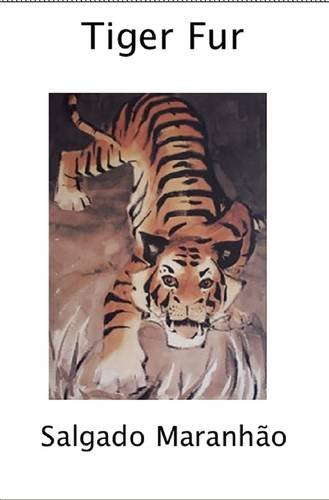
Love--that cliché of poetry. Requested by enamoured fools addled by the hope that cheaply-peddled words will blossom love out of indifference (and, if we're honest, disinterest), love is the phantom-load poets presumably bear. Our "universal" ability to write poetry usually stems from this nauseating rose. Everyone knows love, though rarely treats it with the decadence (as per Baudelaire) or grace (as per Lila Zemborain) to entreat one's nose beyond a quick whiff. Love poems are unfortunately successful, not merely for their accessibility (for who hasn't felt love?), but for their easy digestion too. It's an undesirable trait most obviously typified by its preface. How often has, "this is a love poem," replaced any intriguing insights? How often does the phrase wave away half-baked almost-rhymes, poorly-worded sonnets, cringe-worthy metaphors? Love is the likely suspect of any bad poem, especially if nestled in an angsty adolescent's hidden diary; and because the conceptual interest in love poetry remains "universal," they are bound to stay. However, if considering Tiger Fur--one of Salgado Maranhão's most recent works--as love poems, they do the form a much needed justice.
Maranhão's work establishes the heat of the sensual between ecstasy and anguish which, in the words of his translator, Alexis Levitin, are "as in life itself, commingled." The titular poem of Maranhão's work speaks to both the "sudden clash of lips on skin," love at its greatest pleasure, and "the fibers of this fire/... made of tiger's fur," love's tendencies toward destruction. His poems are thus grounded in turmoil and vacillates between masochism and sadism, pain and pleasure. As such, the poems are neither easily explained nor understood by the love poem's usual backboard. Indeed, his poetry feels as characterized by a falling in love as growing mad with regret, often just as interested in the "rite/ begging for its dawn," as "the discreet silence of the plunge/ and the lava of the empty/ heart." Caught by the hazy turbulence of love's mental states, Maranhão forms a pre-language language to unfold his encounters again in the space of the poem. Never doubting the fleeting existence of the presence and the failures of memory, his poetry begins in the delirium of awakening, offering the reader not the actual encounter, but its afterthoughts. As in "Pre-Logos I":
From some indomitable roarAny sentiment and meaning to the words becomes muddled by the words of an already-sounded voice. Primal imagery defines this pre-language language, in addition to the literal sense of a language spoken before our own language. This "ancestral silence" is not a blank canvas, nor an origin, but something of an echo pressing the present voice with its own dreams and desires. Maranhão's work then strives to "rush/ to return to the future," only to find this landscape spoiled by an eagerness to forget that which refuses to be forgotten.
(submerged like the pulsing
within stones) I feel
the vortex
of its gleaming
in my jugular.
That's why I scream
so the words
will know me.
This unrelenting descent into love seems to possess a Dionysian logic; though as the sheen of tiger's fur conceals hungering claws, the suggestion betrays the pre-meditated deliberations of the poems. As noted in the Afterword by Antonio Cicero, Maranhão identifies strongly with the Apollonian, evident from an "obvious rhythmic control of his language." Although some of Maranhão's meter is lost from translation, Levitin's efforts retain much of the musicality, even when the poem's paradoxical allegiances seem inextricable from Maranhão's native tongue. It's a difficulty Levitin acknowledges with the Italian dictum, "Tradutorre, traditore" ("Translator, traitor"). Applying his closing pondering of whether translators "can ever be true" befits the difficulty of reading Tiger Fur in one language or another. Despite Maranhão's allegiance to the Greek god of truth and light, his poems present a profound absence of clarity. Apollo's emphasis on meter may resonate more strongly due to his attunement to structure and the meditated use of rhyme, alliteration, and spacing, though the presence of Dionysus is difficult to refute altogether. Sobriety consists throughout, but not without the haze of sleepless nights, where one can lose themselves "among dogs/ without a moon." In the contradicting weave of his poems, all things contain within them their opposites--all too appropriate for the paradoxical relationship shared between Dionysus and Apollo in Greek myth.
One might also recognize in Maranhão a touch of the Duende. The image of love manifest as a "child-god" gesturing for a "Life wanting blood," dances with the subterranean reaches sparkled by the duende's mischief. An eager darkness underlines the punctuality of Maranhão, a "flight/ without a plan" into the love's churning throes, evocative of the careless interest in dangerous circumstances Lorca identified in bull-fighting. The irrevocable ecstasy pursued "in the dream snares our eye," leaving one reeling from the pain of "surrendering to the only game." For once ecstasy is reached, the curse of its departure is not far behind. Every chance of attaining the object of desire falls short of holding on or keeping its attention; yet in failing to achieve either one, plunging instead towards the realm of darkness and "avaricious myth." Ecstasy's space in the poems draws a bridge between life's cries and death's silences, unreachable without embracing harm's way.
Tiger Fur presents a poetry of love that is difficult, if not impossible, to do justice through description. Pointing to Maranhão's other influences--from pre-Colombian, Amazonian, and Yoruba poetry and myth--only reveals an underlying dedication to experimental play of past upon present, remembering upon forgetting, the loved upon the lover which persists unspoken through the poems' meticulous meter.
Before the silenceNo matter the effort, the present can't escape the past, and the future is too chaotic to be unattainable. Even after having the privilege to hear Maranhão explain the context behind some of his poems in person, there remains an untenable image, "the tracks, no more, of some forgotten tale/ of treasure that bewilders us and takes us in,/ so winning it we only win chagrin." One can only hope Maranhão inspires a new poetry of love: one more invested in the losing than the lost.
that observes
and the fever that affronts all limits,
a kingdom now declares itself.

No comments:
Post a Comment