Review Written and Edited by Peter Buller
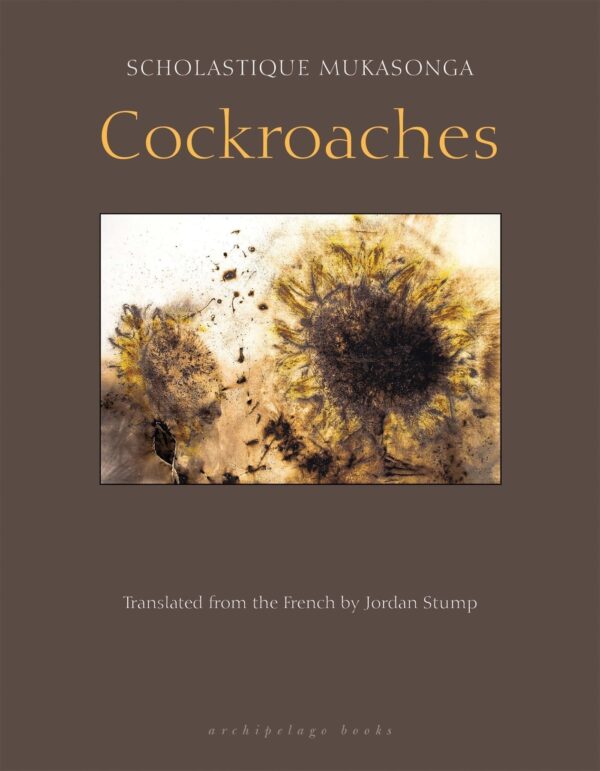
For many, writing serves to maintain memory. Autobiographies lend themselves to this kind of writing most; whether they are diaries tucked beneath one's bed or lengthy journals carefully composed to preserve personal history. In either case, such writing formulates our lives into the morphing branches of books, reaching the mind of a single person or innumerable peoples spanning countries if not continents. While reading the stories born of this kind of writing, I find that the intensity carried by the writer is often lost to me. Details that should strike me as intimate or private--irreducible in their particularity--fade beneath the ambiguities of language. Scholastique Mukasonga's Cockroaches is striking, then, for maintaining this intensity to her reminiscences; and fusing the contrasts between the horrors of genocidal oppression with the stunning obliqueness of life after surviving it.
This works, perhaps, because Cockroaches isn't purely autobiographical in its endeavours. Mukasonga recalls the traumatic experiences of her life not just for the confessional expression of pent-up sentiments, but also as a way to do justice to the dead. Mukasonga's narrative is as much a retelling of the events leading to the 1994 Rwandan genocide as an active resurrection of its victims. In the letters of the page, friends and family lost to cruelty and prejudice breathe again, their words echoed by the reader. However, this process of revival remains soaked in terrible trauma, grief that pains the hand of its writer:
All I have of my loved ones' deaths are black holes and fragments of horror. What hurts the worst? Not knowing how they died or knowing how they were killed? The fear they felt, the cruelty they endured, sometimes it seems I now have to endure it in turn, flee it in turn. All I have left is the terrible guilt of living on amid so many dead. But what is my pain next to everything they suffered before their tormentors granted them the death that was their only escape?Recollection here isn't purely soothing. Images from the past, coloured by the hindsight of events to come, become excruciating, memorial vacuums after intense suffering. Mukasonga's account is gripping because of this excruciating difficulty, hard to read as it must have been to write. The book demands attention with the dying cries of the innumerably powerless.
Various stories that deal with the dehumanization of such conflicts employ naming as a means of restoring agency to victims. Homeric critics argued this point most famously for The Iliad, noting how soldiers in their dying moments inspire glimpses into their person, origins, and aspirations. Mukasonga does this also, reciting "the names of all those who have no one left to mourn them." Unlike the case of Homer, restoring humanity to those lost to brutal, senseless massacres is not only painful, but itself somewhat disillusioning. "I cry out their names," Mukasonga writes in revisiting her village, "to whom? for whom?" The question hangs, lingering as the paragraphs that follow tell the person's contributions, their characteristics, who they were and how Mukasonga knew and recognized them. In these final pages, the people become more than nameless bodies tossed into mass graves, but people with different lives, hopes, and dreams.
I imagine many will find Cockroaches too harrowing to read. Certainly, it seems that readers of the modern age love nothing more than books that provide the stairway to escape the horrors of the reality. One of the imaginative wonders of the book, however, is its capacity to reframe the tremors of history into the context of our lives. The current trajectory of our own nation towards warmongering makes such lessons all the more important to remember. Amidst all the horror and despair, Mukasonga still closes her eyes and restores the dead their place in life. "In the bright night of my memory, they're all there." No one battles the storms and wins, and the ensuing forest fires claim all too many lives; yet beneath the ash-layered floors are always survivors. "No genocide is perfect." Traces remain of those lost to oblivion, floating as innocuously through the air as snakes weave through the thickets of overgrown homes.

No comments:
Post a Comment